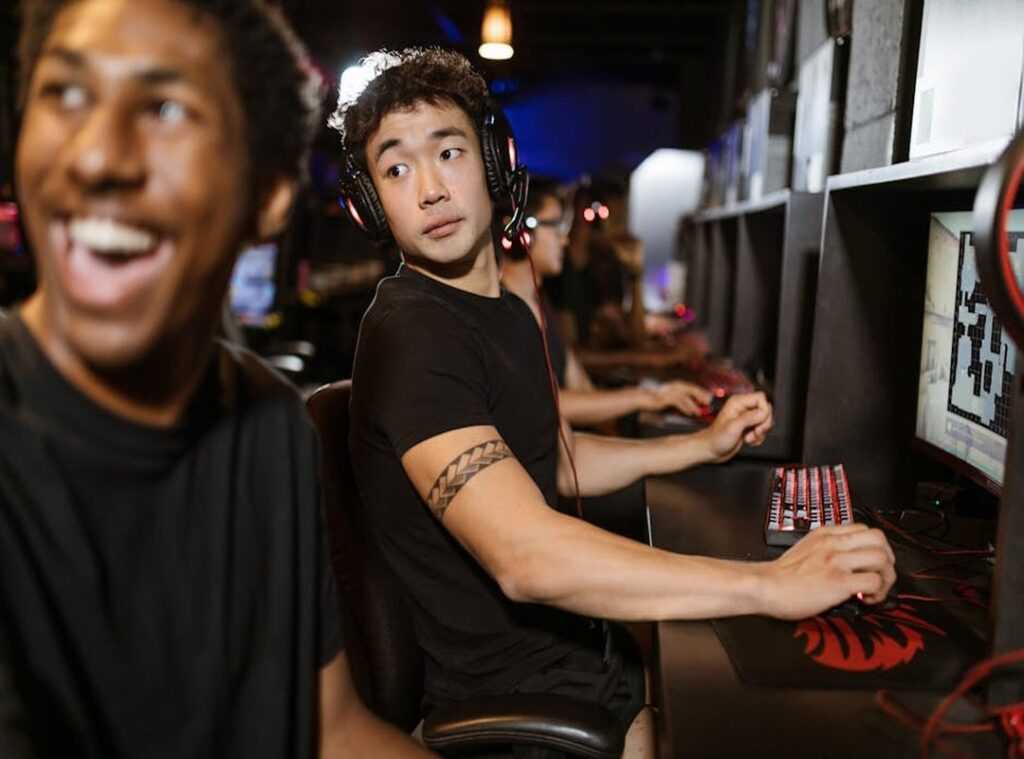
I’ve tested hundreds of gaming setups and watched pros lose matches because of tech they thought was good enough.
You’re probably here because you want to know what gear and software actually matters. Not what streamers get paid to promote. What works.
Here’s the truth: the gap between amateur and pro isn’t just skill. It’s the tech stack running behind every play.
I spent years analyzing tournament infrastructure and breaking down what top players actually use. Not what’s on their sponsorship deals. What’s plugged in and running when the match starts.
This guide covers the hardware, software, and platforms that make a difference in competitive play. I’ll show you what impacts your performance and what’s just expensive decoration.
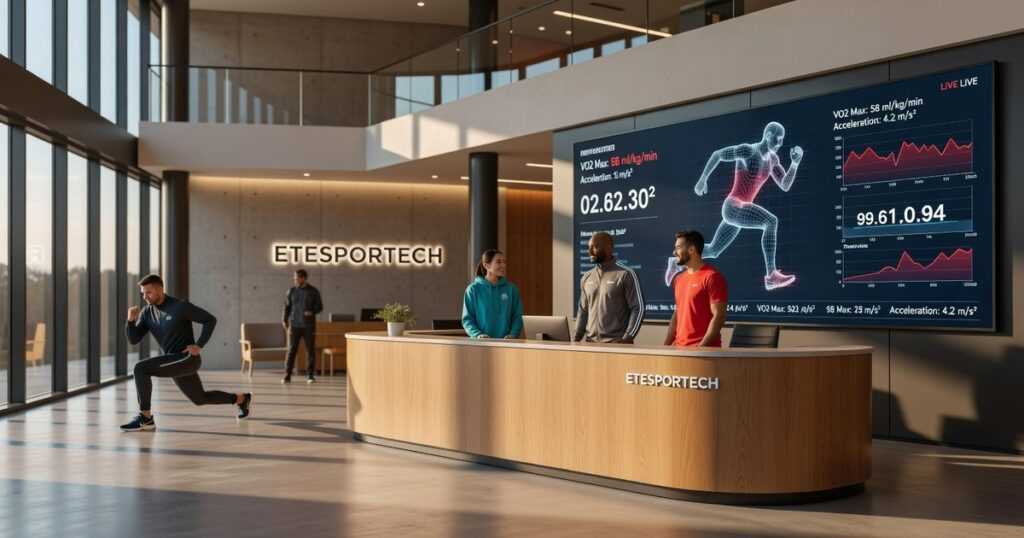
We track esports tech at etesportech by watching what wins tournaments. We test setups and talk to players who compete at the highest levels. That’s how I know what separates gear that helps from gear that just looks good.
You’ll learn which solutions power individual mechanics, team coordination, and the infrastructure that makes global competition possible.
No fluff about RGB lighting or marketing buzzwords. Just the tech that matters when you’re trying to win.
Core Performance Hardware: The Player’s Foundation
You’ve probably heard it before.
“It’s not about the gear, it’s about skill.”
And yeah, there’s truth to that. A pro player with a basic setup will still destroy most of us. But here’s what that argument misses: at the highest levels, everyone has skill. The difference often comes down to who sees the enemy first and who can execute faster.
I’m talking milliseconds here. But in competitive gaming, milliseconds decide rounds.
Let me break down what actually matters.
High-Refresh-Rate Monitors & GPUs
Your monitor refresh rate determines how often you see new information. A 60Hz display shows you 60 frames per second. A 240Hz monitor? Four times that.
When you’re tracking an opponent peeking around a corner, that 240Hz screen literally shows you their position sooner. It’s not magic. It’s just math.
But here’s the catch. Your GPU needs to push those frames. If you’re running a 240Hz monitor with a GPU that only outputs 100fps, you’re wasting money. The pairing matters more than either component alone.
NVIDIA Reflex takes this further by reducing the time between your click and the action appearing on screen. Some players report latency reductions of 20-30ms (which is huge when the average human reaction time is around 200ms).
Now, some people argue that 144Hz is enough and anything beyond that is overkill. For casual play, they’re right. But if you’re serious about competing, that extra visual information becomes your edge.
Precision Peripherals: Mice, Keyboards, Headsets
Walk into any gaming store and you’ll see dozens of mice claiming to be “pro-grade.” Most of it is marketing.
What you actually need is simple. A lightweight mouse (under 70 grams is ideal) with a sensor that tracks perfectly at high speeds. Look for specs like 400+ IPS (inches per second) and zero acceleration. When you flick to a target, the cursor should land exactly where your muscle memory expects.
Keyboards are a different story. Optical switches vs mechanical switches comes down to one thing: speed. Optical switches register in about 0.2ms compared to 2-5ms for mechanical. That’s ten times faster in some cases.
Does it matter? For most games, probably not. For tactical shooters where the first shot wins? Absolutely.
Headsets deserve more attention than they get. Clear team communication can save a round, but spatial audio is where things get interesting. Hearing exactly where footsteps are coming from gives you information your opponents might miss. Just make sure the microphone doesn’t sound like you’re calling from a tin can (your teammates will thank you).
Network Optimization: The Unseen Advantage
Here’s something most players at Etesportech don’t think about until it’s too late.
Your hardware can be perfect, but if your network is trash, you’re still going to lose fights you should win. I’ve watched players blame their aim when the real problem was packet loss.
Wired ethernet vs WiFi isn’t even a debate. WiFi adds latency and introduces inconsistency. Even the best wireless setup can’t match a direct cable connection.
Your router settings matter too. Quality of Service (QoS) lets you prioritize gaming traffic over everything else on your network. When your roommate starts streaming Netflix, QoS makes sure your game packets get through first.
Some players go further with specialized software that monitors their connection in real-time and routes traffic through the fastest paths to game servers. It’s not necessary for everyone, but if you’re competing at high ranks, stable low-ping connections become non-negotiable.
The bottom line? You don’t need the most expensive gear. You need the right gear working together as a system.
Software & Analytics: The Brains Behind the Brawn

You can grind for hours and still plateau.
I see it all the time. Players put in the work but can’t figure out why their aim isn’t improving or why they keep making the same mistakes in matches.
The difference? They’re practicing blind.
Aim Trainers & Performance Analytics
Let me break down what actually works. Aim Lab and KovaaK’s both promise to make you a better shooter. But they take different approaches.
Aim Lab gives you a clean interface with exercises that feel like mini-games. It tracks your accuracy, reaction time, and tracking ability across different scenarios. The data dashboard shows you exactly where you’re weak (for me, it was always flick shots to the left). After honing your skills in Aim Lab’s engaging exercises, you can easily track your progress and visualize your improvement by visiting the detailed data dashboard right from the After refining your skills in Aim Lab, you’ll want to showcase your progress on your gaming , where every improvement in accuracy and reaction time can be celebrated.
KovaaK’s feels more raw. It’s less polished but offers way more customization. You can replicate the exact sensitivity and movement from your main game. Pro players tend to prefer it for that reason.
Which one should you use? If you’re just starting out, Aim Lab makes more sense. If you’re already decent and want to fine-tune specific mechanics, KovaaK’s gives you more control.
VOD Review & Strategy Platforms
Here’s where teams actually get better.
Recording your matches is one thing. Knowing what to look for is another. Modern VOD review tools let you scrub through footage, draw plays directly on the map, and tag moments that matter.
Think of it like film study in traditional sports. Except you can pause, rewind, and measure the exact distance of every play.
The best teams I’ve worked with don’t just watch their wins. They dissect their losses frame by frame. They mark every positioning mistake and every missed trade opportunity.
In-Game Overlays & Data Tools
Now we get into the controversial stuff.
Some games allow third-party overlays that feed you information during matches. In League of Legends, tools can track enemy summoner spell cooldowns. In VALORANT, they might show opponent economy and likely buy patterns.
Are these fair? That depends on who you ask.
The game developers set the rules. If it’s allowed, you’re putting yourself at a disadvantage by not using it. If you want more Gaming Updates Etesportech by Etruesports covers regularly, these tools are constantly evolving.
The real question isn’t whether to use them. It’s whether you’re making decisions based on the data or just getting overwhelmed by numbers on your screen.
I’ve seen players tank their performance because they’re staring at stats instead of playing the game. The overlay should inform your choices, not make them for you.
Tournament & Broadcasting Tech: Powering the Spectacle
You ever wonder how they make those esports broadcasts look so clean?
I’m talking about the instant replays that catch every clutch moment. The camera angles that somehow know exactly where the action’s about to happen. The stats that pop up at the perfect time.
It’s not magic. It’s a tech stack most people never see.
Let me break down what’s actually running behind the scenes.
Production & Streaming Solutions
Professional broadcasts use dedicated observer clients. These are special game instances that let camera operators move freely through the match without being a player.
Think of it like having a ghost in the game who can teleport anywhere.
The observer watches the minimap and predicts where fights will break out. They switch between player POVs in real time. When something wild happens (and it always does), instant replay systems capture it from multiple angles.
Production suites like OBS or vMix pull everything together. Game feed, caster cameras, sponsor graphics, live stats. All synced up and streamed out to hundreds of thousands of viewers.
Anti-Cheat & Tournament Integrity Systems
Here’s where it gets serious.
Cheating destroys trust. One scandal can tank an entire tournament’s credibility. So the tech protecting competitive integrity has gotten intense.
We’re talking kernel-level anti-cheat software that runs deeper in your system than most programs. It watches for anything suspicious before the operating system even fully loads.
But cheaters adapt. So now we’ve got AI-based behavior detection analyzing player movements and reaction times. If something looks statistically impossible, it flags for review.
At major LAN events? The security goes even further. Players use locked-down PCs with fresh OS installations. No personal peripherals without inspection. Some tournaments at etesportech events even use hardware that gets wiped between matches.
It’s an arms race. Cheat developers find new exploits. Tournament organizers patch the holes. Repeat forever.
Fan Engagement & Data Platforms
The broadcast is only half the experience now.
Real-time stats integration pulls data straight from the game server. You see a player’s accuracy percentage update live during a firefight. Kill death ratios shift as the match unfolds.
Interactive polls let viewers vote on MVP predictions or which team will win the next round. The results flash on screen seconds later.
Fantasy esports platforms have gotten surprisingly good. They pull live match data and update your fantasy scores in real time. You’re not just watching anymore. You’ve got skin in the game (even if it’s just bragging rights). As fantasy esports platforms continue to evolve, offering real-time score updates and immersive gameplay, the latest Gaming Updates Etesportech by Etruesports highlight just how far we’ve come in making every match feel like a high-stakes competition. As fantasy esports platforms continue to evolve, the latest insights and features, including the exciting “Gaming Updates Etesportech by Etruesports,” highlight how these innovations are transforming the way fans engage with their favorite games.
Some platforms even sync second-screen experiences. Pull up your phone and you get player cams, alternate camera angles, or detailed stats while the main broadcast focuses on the action.
It’s about keeping you locked in for the entire three-hour broadcast instead of tabbing out after one map.
Integrating Tech for a Competitive Edge
You now understand something most players miss.
Winning in esports isn’t just about raw skill. It’s about how well you combine that skill with the right technology.
I’ve shown you the hardware that matters and the software that gives you an edge. You’ve seen how these pieces fit together to create real performance gains.
Here’s your biggest challenge: There are too many options out there. Every week brings new gear and new tools promising to make you better.
But ignoring tech upgrades means you fall behind. Your opponents won’t wait for you to catch up.
The system works because it’s complete. You optimize your hardware for maximum performance. You use software to analyze and improve. You understand the tech that runs the whole ecosystem.
That’s how you build an advantage that lasts.
Take a hard look at your current setup. Compare it against what we’ve covered here.
Pick one area to improve right now. Maybe it’s finally getting that high refresh rate monitor. Maybe it’s adding a training tool to your routine. Maybe it’s fixing your network lag.
Start there. Make that change and measure the difference.
etesportech tracks these trends so you don’t have to guess what works. We test the gear and break down the tech that actually moves the needle.
Your next win starts with the decision you make today. Gaming News Etesportech From Etruesports. Update on Games Etesportech.
 Velmira Zorthane has opinions about tech-enhanced gameplay systems. Informed ones, backed by real experience — but opinions nonetheless, and they doesn't try to disguise them as neutral observation. They thinks a lot of what gets written about Tech-Enhanced Gameplay Systems, Game Strategy Insights, Gaming Setup Optimization Tips is either too cautious to be useful or too confident to be credible, and they's work tends to sit deliberately in the space between those two failure modes.
Reading Velmira's pieces, you get the sense of someone who has thought about this stuff seriously and arrived at actual conclusions — not just collected a range of perspectives and declined to pick one. That can be uncomfortable when they lands on something you disagree with. It's also why the writing is worth engaging with. Velmira isn't interested in telling people what they want to hear. They is interested in telling them what they actually thinks, with enough reasoning behind it that you can push back if you want to. That kind of intellectual honesty is rarer than it should be.
What Velmira is best at is the moment when a familiar topic reveals something unexpected — when the conventional wisdom turns out to be slightly off, or when a small shift in framing changes everything. They finds those moments consistently, which is why they's work tends to generate real discussion rather than just passive agreement.
Velmira Zorthane has opinions about tech-enhanced gameplay systems. Informed ones, backed by real experience — but opinions nonetheless, and they doesn't try to disguise them as neutral observation. They thinks a lot of what gets written about Tech-Enhanced Gameplay Systems, Game Strategy Insights, Gaming Setup Optimization Tips is either too cautious to be useful or too confident to be credible, and they's work tends to sit deliberately in the space between those two failure modes.
Reading Velmira's pieces, you get the sense of someone who has thought about this stuff seriously and arrived at actual conclusions — not just collected a range of perspectives and declined to pick one. That can be uncomfortable when they lands on something you disagree with. It's also why the writing is worth engaging with. Velmira isn't interested in telling people what they want to hear. They is interested in telling them what they actually thinks, with enough reasoning behind it that you can push back if you want to. That kind of intellectual honesty is rarer than it should be.
What Velmira is best at is the moment when a familiar topic reveals something unexpected — when the conventional wisdom turns out to be slightly off, or when a small shift in framing changes everything. They finds those moments consistently, which is why they's work tends to generate real discussion rather than just passive agreement.