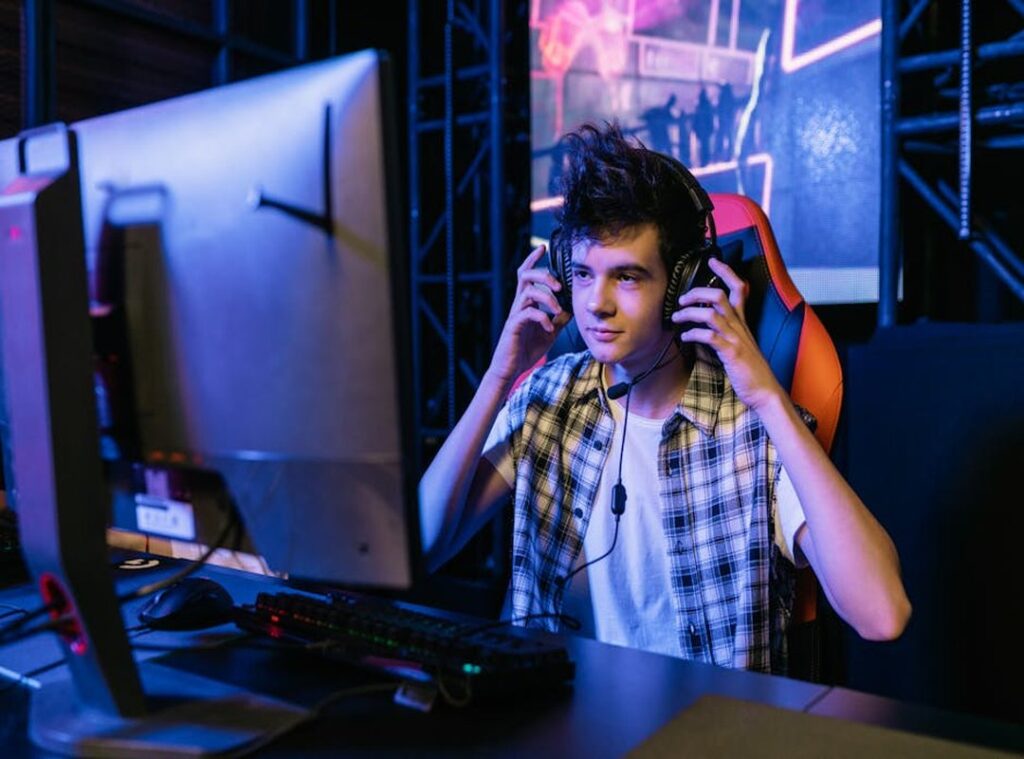

Nothing kills immersion faster than stuttering gameplay and sudden FPS drops at the worst possible moment. If your games feel choppy, unresponsive, or inconsistent, you’re likely not getting the full power out of your system. This guide is built to help you optimize pc for gaming fps with a practical, prioritized checklist that moves from quick software fixes to essential hardware checks. We break down exactly how to identify performance bottlenecks, reduce input lag, and stabilize frame rates so you can enjoy smoother visuals and a competitive edge. By the end, you’ll have a clear action plan to unlock your PC’s true gaming potential.
The Foundation: Essential Software and Driver Optimization
If you want smoother gameplay, fewer crashes, and higher frame rates, this is where it starts. Before buying new hardware, optimize pc for gaming fps by fixing the software foundation.
1. Update Your Graphics Drivers (Non-Negotiable)
Your GPU driver is the software translator between your game and graphics card. NVIDIA’s GeForce Experience and AMD’s Adrenalin Software regularly release game-ready drivers with title-specific optimizations. According to NVIDIA, Game Ready Drivers can deliver measurable performance gains in newly launched titles (NVIDIA Driver Release Notes).
What’s in it for you? Higher FPS, better stability, and fewer weird graphical glitches (the kind that make characters look like melted action figures).
How to update:
- Open GeForce Experience → Drivers → Download
- Open AMD Adrenalin → Check for Updates → Install
Pro tip: Always choose “clean install” if you’ve skipped several versions.
2. Optimize Windows for Gaming
These quick tweaks free up system resources:
| Setting | Where to Find It | Benefit |
|---|---|---|
| Game Mode | Settings → Gaming |
Prioritizes game processes |
| High/Ultimate Performance | Control Panel → Power Options | Prevents CPU throttling |
| Disable Startup Apps | Task Manager → Startup | Faster boot, less background load |
The result? More consistent frame pacing and fewer random slowdowns.
3. Tweak Your Graphics Control Panel
Set Power Management Mode to Prefer Maximum Performance. Disable unnecessary image sharpening or scaling unless needed. This prevents your GPU from downclocking mid-match.
4. Disable Background Overlays
Discord, Steam, and other overlays consume RAM and can cause conflicts. Disable overlays per game for cleaner performance.
Less clutter. More FPS. Better wins.
In-Game Settings: The Art of Balancing Visuals and Performance

If your game stutters during intense moments, the culprit is usually a handful of settings. Let’s start with the biggest FPS killers.
Shadows are notoriously demanding because they constantly update based on light sources and movement. Dropping them from Ultra to High often delivers a noticeable FPS boost with minimal visual sacrifice (unless you enjoy admiring razor-sharp tree shadows mid-firefight).
Next, Anti-Aliasing (AA) smooths jagged edges but can heavily tax your GPU. Techniques like TAA look great, yet lowering or switching AA can recover frames instantly.
Then there are Volumetric Effects—think fog, god rays, and smoke. They’re cinematic, but expensive. Similarly, Ambient Occlusion (AO) adds depth by simulating shadowing in corners and creases. Lowering AO typically improves performance without dramatically flattening visuals.
Now, here’s where many players get confused: Resolution vs. Render Scale. Resolution is your monitor’s native pixel count (e.g., 1920×1080). Render scale, however, controls the percentage of that resolution the game actually renders. Lowering render scale to 90% often boosts FPS significantly while keeping image clarity surprisingly intact—far better than dropping to a lower native resolution.
In addition, consider upscaling technologies. NVIDIA DLSS, AMD FSR, and Intel XeSS render at lower resolutions internally, then use AI or advanced algorithms to upscale the image. Use Quality mode if you want sharper visuals with moderate gains. Switch to Performance when FPS matters most (competitive matches, for example).
Finally, benchmark everything. Use in-game benchmarks or tools like MSI Afterburner to measure FPS changes scientifically. Adjust one setting at a time. That’s how you truly optimize pc for gaming fps—not guesswork, but data-driven tuning.
Beyond the Settings: System Health and Hardware Bottlenecks
I once spent hours lowering graphics settings, convinced my GPU was dying—only to discover my case fans were clogged with dust. The real villain? Thermal throttling.
Thermal throttling happens when your CPU or GPU overheats and automatically reduces speed to prevent damage (great for safety, terrible for frame rates). You might see sudden FPS drops or stuttering during intense scenes.
Conquering Thermal Throttling
Start with the basics:
- Clean dust from fans and heatsinks (compressed air works wonders)
- Improve case airflow with properly positioned intake and exhaust fans
- Monitor temps using tools like HWMonitor (CPUs above 90°C under load are red flags)
Pro tip: Good airflow often matters more than adding another RGB fan (yes, even if it looks cool).
RAM Speed and Configuration
If your RAM isn’t running in dual-channel mode, you’re leaving performance on the table. Dual-channel means your memory sticks work in pairs, doubling bandwidth. Check your motherboard manual for correct slot placement.
Then enter BIOS and confirm XMP (Intel) or DOCP/EXPO (AMD) is enabled so RAM runs at its advertised speed. I once gained 15–20 FPS just by flipping that switch.
Storage Impact
- HDD: Mechanical, slow, prone to in-game texture pop-in
- SATA SSD: Faster load times, smoother gameplay
- NVMe SSD: Blazing speeds, ideal for modern asset streaming
Faster drives reduce stutter caused by real-time asset loading.
De-bloat Your System
Uninstall pre-installed apps and disable unnecessary startup programs. Background processes quietly eat CPU cycles and RAM.
Combine this with smart cable management—like these cable management tips for a clean and efficient gaming desk—to optimize pc for gaming fps and keep thermals under control.
Advanced Tuning: Squeezing Out Every Last Frame
Overclocking is the process of increasing a CPU or GPU’s clock speed beyond factory settings to gain extra performance. Tools like MSI Afterburner (GPU) and Ryzen Master (CPU) make this accessible. In controlled benchmarks from TechPowerUp, moderate GPU overclocks delivered 5–12% FPS gains without instability.
To optimize pc for gaming fps, advanced users also tweak core behavior. Older titles often rely on fewer threads. Disabling extra cores or using Process Lasso to prioritize game processes can reduce scheduling latency.
• Case studies show smoother frame pacing in DirectX 9 games after core limiting.
Pro tip: Stress-test with Cinebench or 3DMark before long sessions.
Locking In Your Competitive Edge
You came here to fix low FPS—and now you have a complete toolkit to diagnose and eliminate the root causes holding your system back. By applying these software, hardware, and in-game tweaks, you’re ready to optimize pc for gaming fps and unlock smoother performance. Don’t settle for lag—start with the foundational software fixes now and feel the difference in your very next match.
 Nicole Pettigrewayde is the kind of writer who genuinely cannot publish something without checking it twice. Maybe three times. They came to game strategy insights through years of hands-on work rather than theory, which means the things they writes about — Game Strategy Insights, Hot Topics in Gaming, Expert Breakdowns, among other areas — are things they has actually tested, questioned, and revised opinions on more than once.
That shows in the work. Nicole's pieces tend to go a level deeper than most. Not in a way that becomes unreadable, but in a way that makes you realize you'd been missing something important. They has a habit of finding the detail that everybody else glosses over and making it the center of the story — which sounds simple, but takes a rare combination of curiosity and patience to pull off consistently. The writing never feels rushed. It feels like someone who sat with the subject long enough to actually understand it.
Outside of specific topics, what Nicole cares about most is whether the reader walks away with something useful. Not impressed. Not entertained. Useful. That's a harder bar to clear than it sounds, and they clears it more often than not — which is why readers tend to remember Nicole's articles long after they've forgotten the headline.
Nicole Pettigrewayde is the kind of writer who genuinely cannot publish something without checking it twice. Maybe three times. They came to game strategy insights through years of hands-on work rather than theory, which means the things they writes about — Game Strategy Insights, Hot Topics in Gaming, Expert Breakdowns, among other areas — are things they has actually tested, questioned, and revised opinions on more than once.
That shows in the work. Nicole's pieces tend to go a level deeper than most. Not in a way that becomes unreadable, but in a way that makes you realize you'd been missing something important. They has a habit of finding the detail that everybody else glosses over and making it the center of the story — which sounds simple, but takes a rare combination of curiosity and patience to pull off consistently. The writing never feels rushed. It feels like someone who sat with the subject long enough to actually understand it.
Outside of specific topics, what Nicole cares about most is whether the reader walks away with something useful. Not impressed. Not entertained. Useful. That's a harder bar to clear than it sounds, and they clears it more often than not — which is why readers tend to remember Nicole's articles long after they've forgotten the headline.