
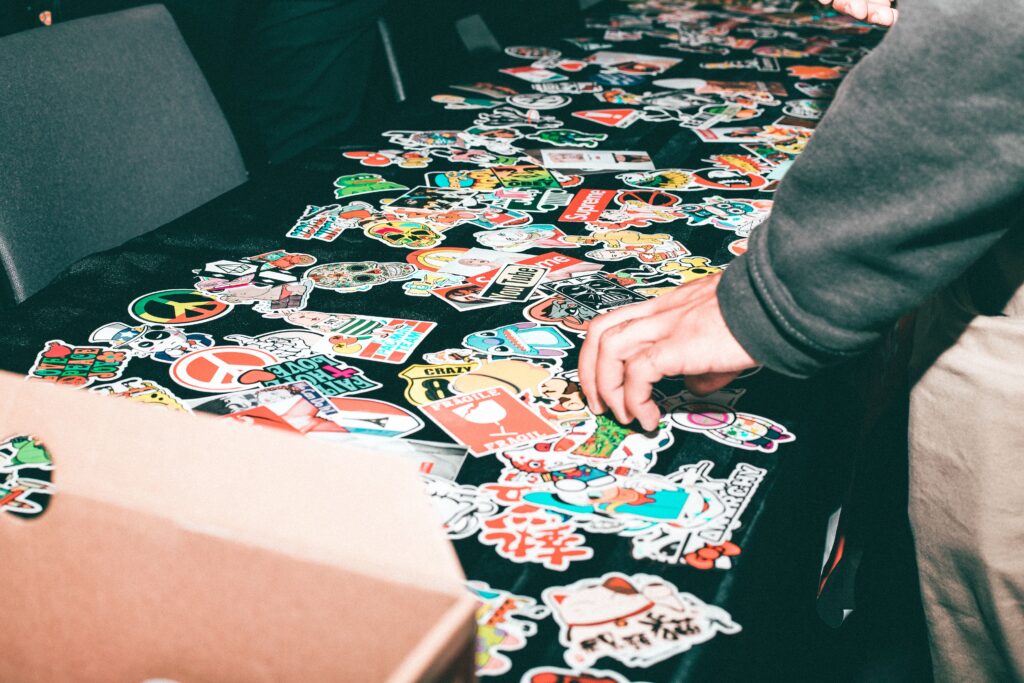
For most of Counter-Strike’s history, the top of the market was knives. They were the rarest unboxable items, they carried the highest prices, and an expensive inventory almost by definition had a knife at the centre of it. In 2026 that stopped being true, and the items that replaced them at the top of the performance tables were tournament stickers.
The reason is structural rather than fashionable, and it says something useful about how this economy now works.
What Broke the Knife Market
In October 2025, Valve allowed knives and gloves to be produced through trade-up contracts. Overnight, an item class whose entire value rested on a 0.26 percent unboxing chance could be manufactured on demand from five covert skins. Prices fell by half or more within days, and the segment has never fully recovered.
The important detail is not the size of the fall. It is that the fall was caused by supply becoming elastic. Knives went from being scarce by rule to being scarce only by cost.
Why Stickers Were Immune
Tournament stickers cannot be crafted. They enter circulation through capsules sold around a Major, and when that Major is over the capsules stop being produced. Supply from that point onward only decreases, because every sticker applied to a weapon is permanently removed from the tradeable pool.
This is the crucial mechanic. Applying a sticker destroys it as a tradeable item. Scraping it destroys it entirely. A sticker collection is therefore in permanent, irreversible decline from the day its capsule leaves the store, with no mechanism by which Valve could reverse it short of reissuing the capsule, which it has never done for a Major.
Which Stickers Moved
The strongest performers were holographic and gold variants from early Majors, where original print runs were small and a decade of application has thinned supply severely. Katowice 2014 remains the extreme case and is essentially its own asset class at this point.
More broadly, any sticker from a Major before roughly 2019 outperformed the market average through 2026. Newer stickers behaved more like commodities, because recent capsules sold in far greater volume and the supply reduction from application takes years to bite.
Team stickers from organisations that have since folded or rebranded picked up an additional premium, driven by collectors rather than traders.
The Craft Market
A second dynamic amplified all of this. Applied sticker combinations — crafts — became a collectible category in their own right, with players paying substantial premiums for specific four-sticker arrangements on specific skins.
That created demand for stickers as consumable inputs at the same time as supply was contracting. Two forces pulling the same direction is unusual in this market, and it is most of the explanation for the size of the moves.
What to Watch Now
The July 2026 patch rotated sticker collections again, introducing new capsules and moving others out of circulation. That rotation is the thing to track. The moment a collection stops being sold is the moment its supply curve inverts, and historically the appreciation begins quietly, months before anybody writes about it.
It is also worth being honest about what this does not mean. A contracting supply curve does not guarantee a price rise, it only removes one source of downward pressure. Demand still has to exist, and demand in this game is driven by player counts and tournament attention, both of which fluctuate. Whether you are buying stickers directly, working through capsules, or using a platform such as CSGO Gem, the supply argument is a reason to look closely rather than a reason to buy.
The broader lesson from 2026 is the one the knife crash taught expensively: in an economy owned outright by a single company, the only durable scarcity is scarcity that company cannot undo with a patch. Stickers have it. Knives turned out not to.
 Nicole Pettigrewayde is the kind of writer who genuinely cannot publish something without checking it twice. Maybe three times. They came to game strategy insights through years of hands-on work rather than theory, which means the things they writes about — Game Strategy Insights, Hot Topics in Gaming, Expert Breakdowns, among other areas — are things they has actually tested, questioned, and revised opinions on more than once.
That shows in the work. Nicole's pieces tend to go a level deeper than most. Not in a way that becomes unreadable, but in a way that makes you realize you'd been missing something important. They has a habit of finding the detail that everybody else glosses over and making it the center of the story — which sounds simple, but takes a rare combination of curiosity and patience to pull off consistently. The writing never feels rushed. It feels like someone who sat with the subject long enough to actually understand it.
Outside of specific topics, what Nicole cares about most is whether the reader walks away with something useful. Not impressed. Not entertained. Useful. That's a harder bar to clear than it sounds, and they clears it more often than not — which is why readers tend to remember Nicole's articles long after they've forgotten the headline.
Nicole Pettigrewayde is the kind of writer who genuinely cannot publish something without checking it twice. Maybe three times. They came to game strategy insights through years of hands-on work rather than theory, which means the things they writes about — Game Strategy Insights, Hot Topics in Gaming, Expert Breakdowns, among other areas — are things they has actually tested, questioned, and revised opinions on more than once.
That shows in the work. Nicole's pieces tend to go a level deeper than most. Not in a way that becomes unreadable, but in a way that makes you realize you'd been missing something important. They has a habit of finding the detail that everybody else glosses over and making it the center of the story — which sounds simple, but takes a rare combination of curiosity and patience to pull off consistently. The writing never feels rushed. It feels like someone who sat with the subject long enough to actually understand it.
Outside of specific topics, what Nicole cares about most is whether the reader walks away with something useful. Not impressed. Not entertained. Useful. That's a harder bar to clear than it sounds, and they clears it more often than not — which is why readers tend to remember Nicole's articles long after they've forgotten the headline.