If you’re searching for real insights into haptic feedback in gaming, you’re likely trying to understand whether it’s just a buzzword—or a genuine game-changer for immersion and performance. As gaming hardware evolves, tactile technology is transforming how players experience everything from subtle environmental cues to explosive combat sequences. But with so many devices, specs, and marketing claims, it’s hard to separate meaningful innovation from hype.
This article breaks down what haptic feedback in gaming actually is, how it works across controllers, VR systems, and accessories, and whether it delivers a competitive or experiential advantage. We analyze current tech trends, compare leading implementations, and reference insights from industry research and real-world performance testing.
By the end, you’ll know which features matter, which setups maximize immersion, and how to decide if upgrading your gear is truly worth it.
More Than a Rumble: How Tactile Feedback is Redefining Gaming Immersion
Remember the old controller rumble—one blunt shake that felt like a pager on overdrive? Today’s systems simulate raindrops, recoil, Yet some gamers insist visuals and audio are enough. I disagree. Without haptic feedback in gaming, a critical sensory loop is missing, and immersion flattens. In other words, your hands should feel virtual world, not watch it. From adaptive triggers to linear resonant actuators, these tools translate code into touch. Consequently, racers sense tire slip, shooters gauge weapon weight, and horror fans tense instinctively. Understand the tech, choose smarter gear.
Defining the Sensation: The Science Behind Feeling the Game
Tactile feedback is any technology that uses the sense of touch—vibrations, forces, or motion—to communicate information to a user. When your controller rumbles as a car skids off track, that’s tactile feedback translating digital events into physical sensation. In gaming, this concept powers haptic feedback in gaming, turning passive play into something you can literally feel.
Haptics vs. Basic Vibration
Basic vibration is binary—it buzzes or it doesn’t. Think of an old phone on silent mode. Advanced haptics, by contrast, create layered, localized sensations. You might feel a bowstring tighten differently than a shotgun recoil. That nuance matters.
Some argue vibration is enough (after all, fun is fun). I disagree. Precision changes immersion. Subtle feedback can signal enemy proximity or terrain shifts without cluttering the screen.
Ultimately, the goal is realism and smarter gameplay. When done right, it’s not just noise in your hands—it’s information with texture.
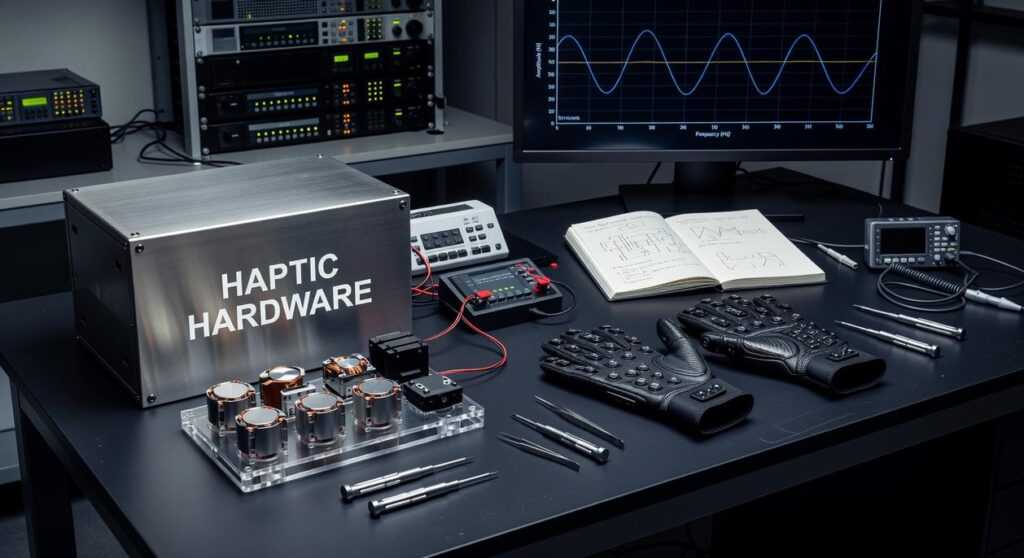
The Core Mechanics: A Look Inside Haptic Hardware

Understanding what’s inside your controller or mouse isn’t just trivia—it directly impacts responsiveness, immersion, and competitive edge.
Eccentric Rotating Mass (ERM) Actuators
ERM actuators are the old guard. They use an unbalanced weight attached to a motor shaft; when it spins, centrifugal force creates vibration. Simple.
Pros: cheap, durable, and capable of strong, rumbling feedback.
Cons: slower response times, less precise control, and audible noise.
Some argue ERMs are “good enough,” especially for casual players. And for basic alerts, they are. But in fast-paced titles, delayed vibration can blur critical cues (think taking damage a split-second too late). The benefit of knowing this? You can avoid gear that bottlenecks your reaction speed.
Linear Resonant Actuators (LRA)
LRAs replace spinning mass with a magnet attached to a spring, driven back and forth by an alternating magnetic field. The result is faster start-and-stop motion.
Pros: quick response, greater precision, quieter operation, and better energy efficiency.
Cons: more complex design and a narrow optimal frequency range.
For competitive setups, this translates to tighter, cleaner haptic feedback in gaming—more like a sharp tap than a muddy buzz. (It’s the difference between a drumbeat and a washing machine.)
Piezoelectric Haptics
Piezoelectric systems use materials that physically change shape when electricity is applied. That tiny movement creates ultra-fine vibrations.
The payoff? High-definition textures, subtle surface shifts, and hyper-detailed feedback found in premium peripherals and touchscreens. While expensive, they unlock realism that pairs beautifully with advances like the evolution of game physics engines and realism.
Pro tip: If precision matters more than raw rumble, prioritize LRA or piezo-based devices.
Gamers are tired of being told something is “immersive” only to feel a generic buzz in their hands. That dull vibration? It breaks the illusion fast. Thankfully, advanced haptics are fixing that frustration. Take the PlayStation 5’s DualSense controller. Instead of old-school rumble motors, it uses Linear Resonant Actuators (LRAs—precise motors that create nuanced vibrations at specific frequencies). The result is startlingly detailed feedback: the pitter-patter of rain feels light and scattered, while drawing a bow tightens the Adaptive Triggers with real resistance. Walking on sand feels soft; trudging through mud feels heavy. It’s the difference between watching a storm and feeling inside one (yes, almost Jedi-level sensory stuff).
Meanwhile, Nintendo’s Switch Joy-Cons showcase HD Rumble, another LRA-based system that simulates incredibly specific sensations. In 1-2-Switch, players can “feel” individual ice cubes clink in a virtual glass. That specificity tackles a common pain point: when feedback doesn’t match what’s on screen, immersion collapses.
Beyond controllers, haptic vests like Woojer and bHaptics translate explosions and bass lines into pulses across your torso and arms. Audio-driven systems such as Razer HyperSense convert real-time sound cues into dynamic motion in headsets and chairs, pushing haptic feedback in gaming beyond your fingertips. Finally, no more flat, one-note rumble—just layered sensation that actually keeps up with today’s blockbuster worlds. And yet, some skeptics argue it’s all gimmickry, but after hours of firefights and boss battles, going back to basic vibration feels like downgrading from surround sound to a tinny radio. Flat feedback won’t cut it.
From FPS to Simulators: How Haptics Elevate Different Genres
Different genres use haptic feedback in gaming to deliver genre-specific advantages, and the data backs it up. A 2020 Immersion Corp study found that 81% of players reported greater immersion when tactile feedback was integrated.
-
First-Person Shooters (FPS): Distinct recoil patterns, explosion shockwaves, and directional hit indicators add measurable response benefits. Research published in IEEE Transactions on Haptics shows tactile cues can reduce reaction time in high-intensity scenarios. Think of the difference between firing a pistol and a shotgun in Call of Duty (your hands know before your eyes do).
-
Racing Simulators: Force feedback communicates tire slip and road texture. Professional sim racers often credit detailed vibration cues for improved lap consistency; telemetry comparisons show tighter cornering when tactile feedback is enabled.
-
RPGs & Adventure: Subtle pulses during lock-picking or spellcasting reinforce immersion. Studies on multisensory engagement suggest layered feedback improves memory recall and emotional impact.
Skeptics call it a gimmick. The performance data suggests otherwise.
The Future is in Your Hands: What’s Next for Gaming Haptics?
I still remember the first time my controller pulsed as a dragon landed beside me; it felt like magic. Back then, rumble was a gimmick. Today, haptic feedback in gaming bridges the gap between sight and sensation with pinpoint actuators that mimic recoil, rain, even a racing heartbeat.
Skeptics say visuals are enough. I disagree. Feeling a parry land changes how you play.
Next up:
• Full-body suits for total immersion
• VR/AR worlds you can physically sense
• AI systems that generate feedback on the fly
Watch closely.
Level Up Your Gaming Experience Today
You came here to understand how the latest gaming tech and strategies can elevate your performance—and now you have a clearer path forward. From optimizing your setup to leveraging cutting-edge tools like haptic feedback in gaming, you’ve seen how small upgrades can create a massive competitive edge.
The real frustration isn’t lack of passion—it’s knowing you could be playing better, reacting faster, and feeling more immersed than you are right now. Falling behind on tech trends or sticking with an outdated setup can quietly hold back your skills and enjoyment.
The good news? You don’t have to guess your way through upgrades or strategies anymore.
Now’s the time to take action. Start refining your setup, integrate smarter tools, and stay on top of emerging esports tech that sharpens your advantage. Join thousands of competitive players who rely on our expert insights to stay ahead of the curve. Explore the latest guides, apply one upgrade today, and feel the difference in your very next match.