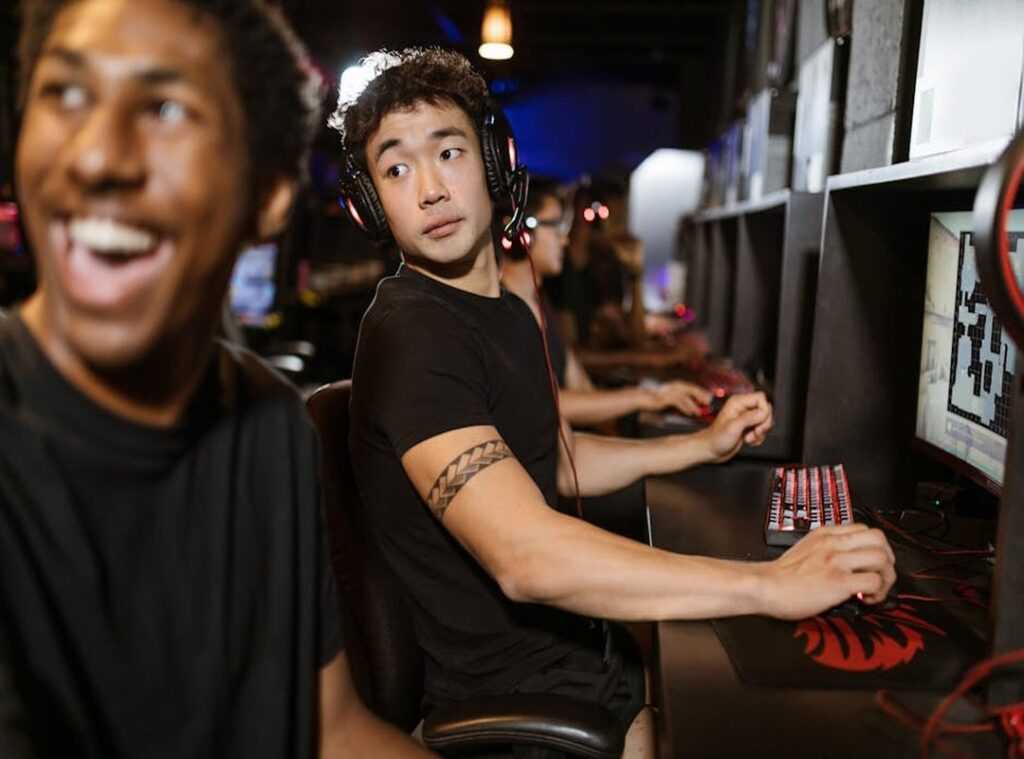
Modern esports events are no longer just competitions—they are large-scale digital productions that blend broadcast television, live entertainment, and high-performance computing. Whether you’re watching a packed arena final or a streamed qualifier on Twitch, every second of what appears on screen is powered by a complex stack of technologies working in sync.
Even casual viewers who might be browsing match schedules or following casino games on platforms like the DraftKings gaming site are still interacting with a deeply technical ecosystem that ensures gameplay, broadcasting, and analytics all run in real time without interruption.
Broadcast Infrastructure: The Backbone of Live Esports
At the core of any esports event is the broadcast pipeline. Unlike traditional sports, esports must capture both a digital game feed and a live production layer simultaneously.
Most major tournaments rely on a combination of RTMP (Real-Time Messaging Protocol) and newer low-latency protocols like SRT (Secure Reliable Transport) to transmit gameplay from servers to production studios. These feeds are then processed through broadcast software such as OBS-based systems or enterprise-level production suites.
Large organisations like ESL FACEIT Group and Riot Games operate dedicated control rooms where directors switch between multiple in-game camera angles, player feeds, and augmented overlays. The goal is to replicate—and often exceed—the polish of traditional sports broadcasts.
Arena Production: Turning Digital Games Into Live Spectacles
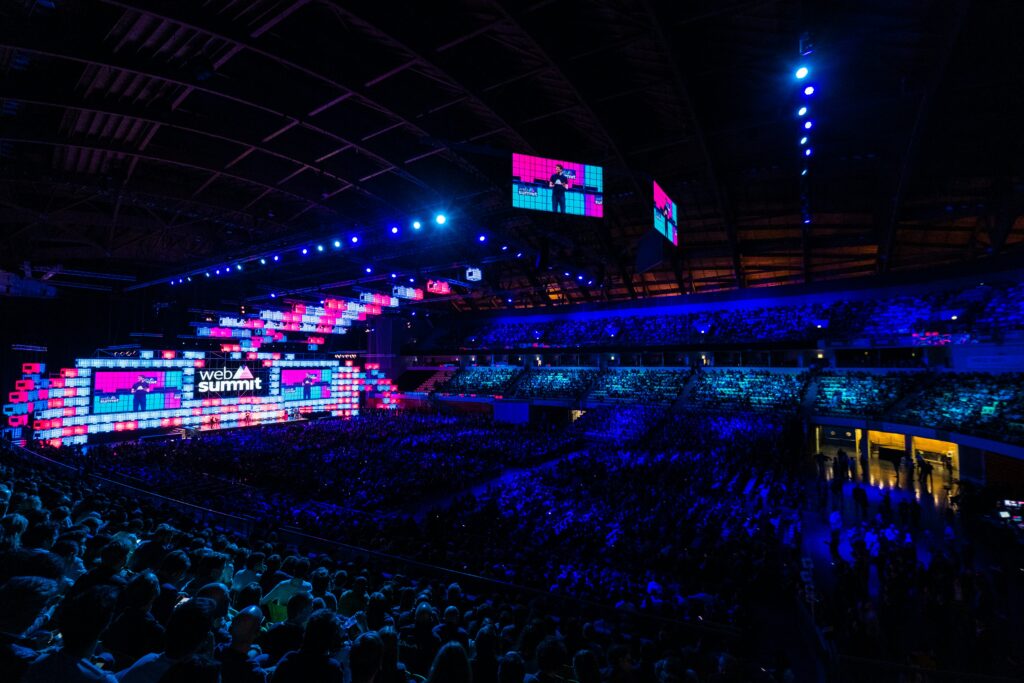
When esports events take place in physical venues, production technology expands dramatically. Events such as League of Legends World Championship and The International use massive LED stages, synchronized lighting rigs, and projection mapping systems to transform arenas into immersive environments.
These systems are driven by real-time game data. For example, when a team secures a major objective or wins a match, lighting sequences, crowd visuals, and stage animations are triggered instantly.
Some events even use motion tracking cameras and augmented reality (AR) graphics to project in-game characters or effects into the physical space. This blending of real and virtual worlds is one of the defining features of modern esports production.
In-Game Technology: Precision, Fairness, and Spectator Control
While the broadcast side is what viewers see, the in-game infrastructure is what makes esports possible in the first place. Competitive games are hosted on high-performance servers designed for low latency and extreme stability.
Titles like those featured in the Counter-Strike 2 Major Championships rely on server tick rates that ensure precise movement and shooting accuracy. Even milliseconds of delay can change outcomes, so server optimisation is a top priority.
Spectator modes are another critical component. Dedicated observer tools allow production teams to fly through maps, follow specific players, and instantly switch perspectives. These tools are often built separately from the player version of the game to avoid performance interference.
Anti-cheat systems also operate at this level. They monitor memory processes, input patterns, and network behaviour to ensure fair competition. These systems run in the background during live matches and are continuously updated by developers like Valve Corporation.
Real-Time Data and Overlay Systems
One of the most impressive parts of esports production is the live data layer. Every action in-game—kills, objectives, item purchases, or rotations—is tracked and instantly converted into broadcast graphics.
These data pipelines feed into overlay systems that display:
- Player statistics
- Team economy or resources
- Match timelines
- Win probability models
- Heatmaps and positioning data
Production teams use this information to enhance storytelling during matches, making it easier for viewers to understand complex strategies in real time. This is especially important for new audiences who may not fully understand game mechanics yet.
Fan Engagement Technology and Second-Screen Experiences
Esports is uniquely interactive compared to traditional sports, largely because of its digital foundation. Many viewers watch matches while actively engaging with companion apps, chat systems, and real-time stats dashboards.
Platforms like Twitch integrate chat, emotes, and extensions that allow fans to vote on predictions, track player stats, or follow multiple camera angles. Some broadcasts even include interactive overlays that let viewers choose what data they want to see.
This second-screen behaviour is part of what makes esports highly engaging. Fans are not just passive viewers—they’re participants in a data-rich ecosystem that reacts in real time.
The Future of Esports Tech
As esports continues to grow, the technology behind it is evolving rapidly. Cloud-based rendering is reducing hardware limitations, AI-driven analytics are improving commentary depth, and virtual production tools are making remote broadcasts nearly indistinguishable from on-site productions.
We are also seeing early adoption of machine learning systems that can predict match outcomes or highlight key moments automatically, reducing the workload on production teams and improving broadcast efficiency.
Behind every esports match is an intricate combination of infrastructure, software, and creative production tools working together seamlessly. From server-level optimisation to AR-enhanced stadium visuals, the industry relies on cutting-edge systems to deliver fast, fair, and visually compelling experiences.
Whether you’re watching casually, analysing strategies, or checking updates across platforms like Twitch, the technology powering esports ensures that every moment feels immediate, immersive, and globally connected.
 Ask Frances Nunesards how they got into hot topics in gaming and you'll probably get a longer answer than you expected. The short version: Frances started doing it, got genuinely hooked, and at some point realized they had accumulated enough hard-won knowledge that it would be a waste not to share it. So they started writing.
What makes Frances worth reading is that they skips the obvious stuff. Nobody needs another surface-level take on Hot Topics in Gaming, Gaming Setup Optimization Tips, Expert Breakdowns. What readers actually want is the nuance — the part that only becomes clear after you've made a few mistakes and figured out why. That's the territory Frances operates in. The writing is direct, occasionally blunt, and always built around what's actually true rather than what sounds good in an article. They has little patience for filler, which means they's pieces tend to be denser with real information than the average post on the same subject.
Frances doesn't write to impress anyone. They writes because they has things to say that they genuinely thinks people should hear. That motivation — basic as it sounds — produces something noticeably different from content written for clicks or word count. Readers pick up on it. The comments on Frances's work tend to reflect that.
Ask Frances Nunesards how they got into hot topics in gaming and you'll probably get a longer answer than you expected. The short version: Frances started doing it, got genuinely hooked, and at some point realized they had accumulated enough hard-won knowledge that it would be a waste not to share it. So they started writing.
What makes Frances worth reading is that they skips the obvious stuff. Nobody needs another surface-level take on Hot Topics in Gaming, Gaming Setup Optimization Tips, Expert Breakdowns. What readers actually want is the nuance — the part that only becomes clear after you've made a few mistakes and figured out why. That's the territory Frances operates in. The writing is direct, occasionally blunt, and always built around what's actually true rather than what sounds good in an article. They has little patience for filler, which means they's pieces tend to be denser with real information than the average post on the same subject.
Frances doesn't write to impress anyone. They writes because they has things to say that they genuinely thinks people should hear. That motivation — basic as it sounds — produces something noticeably different from content written for clicks or word count. Readers pick up on it. The comments on Frances's work tend to reflect that.